Blue Fields, captured by Simon Butterworth was shot at the Useless Loop solar salt operation situated in Shark Bay, the westernmost point of mainland Australia.
'Clubs in Italy' series, captured by Massimo Siragusa shortlisted for the architecture award.
Lidos of England: Lost & Found:Lidos were perhaps at their most popular between the wars when people took their holidays here in England. Now, the swimming pools have fallen into decline. THe ones remaining are desperately clinging on while campaigns are fought to save them from disappearing. Captured by Jonathan Syer.
An image of Berlin by Jürgen Schrepfer shortlisted for the architecture category.
Gina Alderson-Hicks from Australia was shortlisted in the Open, Architecture competition for this image. She said: 'Miracle Mile is my first photograph taken after relocating to Los Angeles from New York.'
Futuristic Archaeology: This conceptual picture by Deasung Lee is intended to draw attention to desertification in Mongolia
Frog story: Three cute frog in the morning light captured by Harfian Herdi.
What really happens to your body when you fly? What health risks should you be concerned about? (Photo: Thinkstock)
Let's face it: Human beings weren't designed to spend hours at a time packed inside a pressure-controlled capsule with recycled air and manufactured heat with hundreds of other people tens of thousands of feet in the air. But that's what we do — some of us often — every time we get on an airplane. Add in the jet lag and sleeplessness, and you have a recipe for true physiological torture.
So what really happens to your body when you fly? And what can you do to combat, or at least minimize, the effects?
Dehydration
Flying can lead to serious dehydration, so be sure to drink plenty of water, both before and during the flight. (Photo: Getty Images)
As far as the human body goes, dehydration is the most punishing effect of flying. Our bodies are designed to be most comfortable at around 50 percent humidity. But an airplane cabin's humidity can be as low as 10 percent. That's really dry. Drier, in fact, than being in a desert. This level of extreme dryness can lead to dehydration — and rapidly.
According to the Mayo Clinic, dehydration causes "dry mouth, skin, eyes, and mucous membranes. It can cause headache, constipation, thirst, reduced urination, and in extreme cases, low blood pressure, rapid heart rate, and fever." Dry sinuses, nostrils, and throat, caused by dehydration, can make passengers a lot more prone to infection. To combat these symptoms, drink plenty of water, both before and during the flight. Alcohol, coffee, and tea all have diuretic properties and can dehydrate you further, so take it easy on those beverages when you fly.
Ear pain
The pressure changes that occur during flight can lead to severe pain in the ear canal. (Photo: Getty Images)
When cabin pressure changes during takeoff and landing, the air on your ears can expand, causing pressure within the ear canal. If this pressure cannot be released, due to a blockage from a cold for example, it can cause severe ear pain. Motion sickness also starts in the ears, and this trapped gas can make a passenger feel nauseous.
To alleviate the pressure, the World Health Organization recommends swallowing, chewing, or yawning. "As soon as it is recognized that the problem will not resolve itself using these methods, a short forceful expiration against a pinched nose and closed mouth (Valsalva maneuver) should be tried and will usually help."
Oxygen Deprivation
If you're having trouble breathing, let the flight crew know, so they can provide you with oxygen. (Photo: Getty Images)
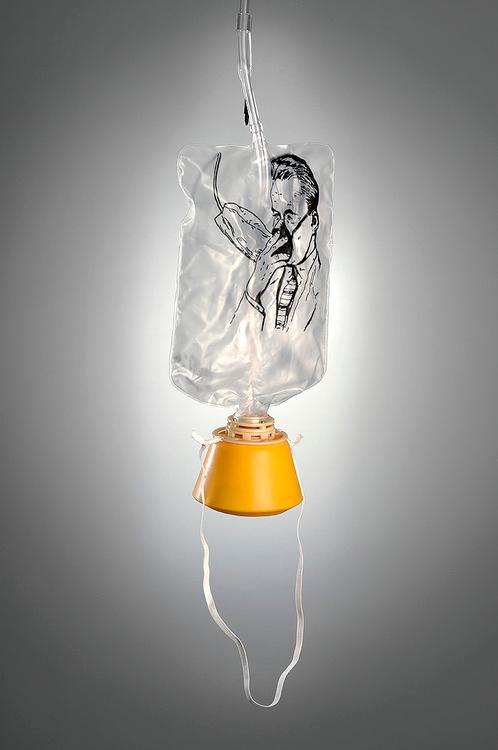
Flying can also do a number on your breathing. The lower oxygen levels in the plane's pressurized air can lead to minor oxygen deprivation. Over time, this can lead to lightheadedness, shallow breathing, difficulty concentrating, and aching joints. If you find yourself having difficulty breathing on board a flight, always let a flight attendant know. He or she may be able to provide you with an oxygen supply or increase the airflow to the cabin.
Swelling
To improve circulation and prevent swelling, get up, walk around, and stretch! (Photo: Getty Images)
The lower pressure in the cabin can lower blood pressure, affecting blood circulation. Combine this with long periods of inactivity and passengers, especially on long haul flights, can experience swelling in the feet, ankles and lower legs. To limit swelling, wear support socks and try to get up and move around the cabin every 30 minutes. In your seat you can flex and stretch out your feet to increase circulation to your lower extremities.
DVT
Wear support stockings to prevent swelling that could lead to a dangerous blood clot. (Photo: Corbis)
This is one of the scariest physical side effects of flying: swelling in the feet and legs that can be an indication of blood clots, which can be potentially fatal. "Deep vein thrombosis, or DVT, is a blood clot that forms in a deep vein in the body, usually in the lower leg or thigh," according to the National Heart, Lung, and Blood Institute. The clot can block blood flow to the leg, causing swelling. "A blood clot can also dislodge or break off and travel through the bloodstream to the lungs, where it can block blood flow. This can then damage the lungs and other organs and even be fatal." To help prevent blood clots, moving around periodically during the flight and wearing support stockings will help keep blood circulating through the legs. If you start to feel short of breath or experience chest pain, and if your legs swell after your flight, you should seek medical attention.
Radiation exposure
Higher altitudes mean thinner atmosphere, exposing passengers to higher levels of radiation while in flight. (Photo: Getty Images)
Up at 30,000 feet, the Earth's atmosphere is much thinner. And that exposes plane passengers to a much higher level of cosmic radiation than at ground level. For example, a flight from New York to Los Angeles can expose a passenger to roughly the same level of radiation as one-third of a chest X-ray. This level of radiation is unlikely to cause most people any long-term issues, but it can be more of a concern to air flight crew or frequent fliers, as long-term exposure to radiation can cause cellular changes in the body.
Jet lag
Traveling from one time zone to another is enough to wreak havoc on your body as well as your sleep patterns. (Photo: Getty Images)
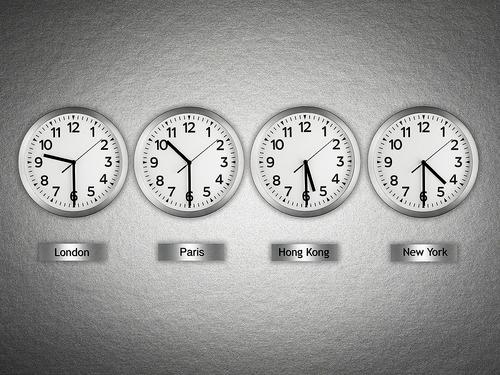
The usual rule states that for every hour you travel through the time zones, it takes one whole day to adjust your body to the new time. And the further you fly, the worse you are likely to feel. Jet lag can have some pretty strong physiological effects on the body aside from just impacting your sleep patterns. It can cause fatigue, headaches, irritability, digestive issues, and even nausea and loss of appetite. Many experts believe the best remedy for jet lag is light — that by controlling your exposure to sunlight in the beginning stages of your trip, you can help rebalance your circadian rhythm (body clock).
Technology's come a long way in the last few years, helping make parenting a fair bit easier (but much more expensive). And while you definitely don'tneed all of these futuristic gadgets, they'll help put your mind at ease and make getting from A to B with a tiny human much simpler.
Using pulse oximetry (a technology that doctors use in hospital) to keep an eye on your baby's vital signs, this gadget shines small LED lights on the skin to sense how much light makes it back to the photo receptor. It alerts you or any issues by sounding an alarm if the heart rate dips too low – or spikes too high.
Gone are the days of testing the temperature of your baby's bottle on the back of your wrist; this clever band lets you know when the milk is the perfect warmth for your tot.
This world's first Bluetooth smart pacifier monitors a baby's temperature by transmitting the data back to a parent's smartphone, via the free associated app. Parents don't even need to be in the same room as a child – it works from a distance of 30 metres.
From checking your baby's sleep status and listening in on him, we think you'll agree this smart baby monitor is pretty genius. A turtle monitor is attached to a onesie, which sends data and audio to a lilypad monitor before sending it on to your smartphone.
Forget about hauling your child's car seat from one car to another or lucking out when you're travelling abroad – this genius design can be completely deflated and inflated in less than 40 seconds. It's perfectly safe, too, and uses a technology developed by the military.
Measuring your child's sleep patterns through a smartphone app, these beds are definitely a thing of the future. They don't come cheap but they adjust to fit your child as he grows and uses a full-body algorithm to assess the quality of his sleep.
Ideal to use on holiday or when your little one's staying with the in-law's, this collapsible bathtub can be used from age newborn to 18 months – and in two different positions.
Designed to give you peace of mind when your child's in the swimming pool, the iSwimband is a wearable accessory which alerts your Bluetooth-enabled phone, tablet or music player if your child has been submerged beyond a preset time limit of if a non-swimmer (like your toddler) goes in the water.
This has to be the ultimate baby bouncer. It has five unique motions to soothe and bounce your baby as if he were in your arms – all of which can be adjusted from your smartphone.
Rapper 50 Cent's SMS Audio company introduced a new range of Star Wars-themed headphones, nicely timed for the release of Star Wars VII: The Force Awakens later in 2015. The new cans sport designs based on R2-D2, Chewbacca, Darth Vadar and a TIE fighter.
Mercedes-Benz showed off its 'F 015 Luxury in Motion' driverless car concept. Designed to be totally autonomous, the car is a long way off being available to buy but it's a fascinating glimpse into the future.The car is controlled through eye tracking and hand gestures, while the front seats can be turned around to face the back seats so that the whole family can talk to each other face-to-face while the car is moving. Scary stuff.
HP's new tiny desktop PC is small enough to fit in the palm of your hand. The Pavilion Mini Desktop may be small, but it's energy efficient and functions as a full Windows 8.1 PC and will cost just £269.99.
The Pono high-res audio player was introduced by rock legend Neil Young and his company PonoMusic and was crowdfunded on Kickstarter. The brightly coloured music player sports an unusual triangular shape - like a Toblerone - and promises to playback music in the pristine quality that it was recorded in rather than the compressed audio that most listeners are used to on services such as iTunes and Spotify.
Executive VP of Samsung Electronics America Joe Stinziano unveiled the new Samsung SUHD smart TV, which uses 'quantum dot' technology. This involves thousands of tiny crystals that Samsung says creates brighter pictures with better colours.
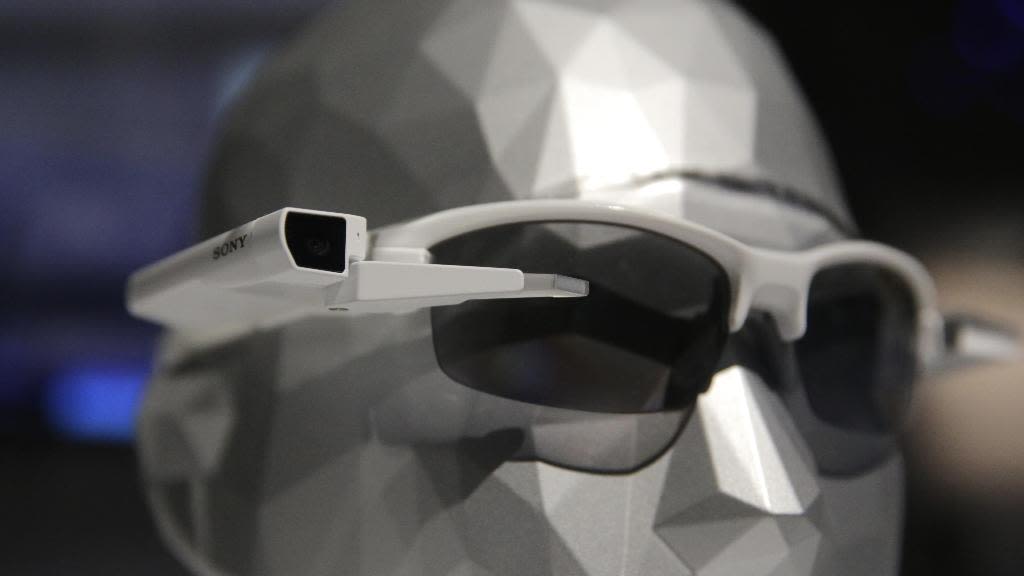
Sony unveiled a rival to Google Glass in the form of SmartEyeglass. The smart specs project a tiny, slightly transparent display in front of both eyes. The maker also showed off its SmartEyeglass Attach! prototype which, as the name suggests, is meant to attach to regular glasses, with the colour display appearing just outside the right eye's peripheral vision.
Belty is a smart belt that automatically loosens itself when you've eaten too much. The contraption expands and contracts depending how much food you've consumed and how much exercise you've done. It does this by measuring movement using an accelerometer and gyroscope while the dedicated iPhone app charts your waistline data and sends feedback on how to keep trim.
The world's first 15-inch Chromebook made its debut, thanks to Acer. The 15.6-inch beast features a slick design and sports a distinctive textured finish and will pack an all day battery life. And because it's a Chromebook, it'll also be much cheaper than most of its Windows 8 and Mac OS X rivals.
Nikon showcased its first ever touchscreen DSLR in the form of the D5500. An upgrade to the previous model - the D5300 - the new camera is one of the smallest and lightest DSLRs around and also sports an adjustable LCD screen.
British tech brand Smarter unveiled the world's first bean to cup Wi-Fi-enabled coffee machine. Following on from the company's connected iKettle, the new gadget can wake up users with a cup of coffee in the mornings and can even ask users if they want a coffee made for them the second they walk in the door, thanks to the 'welcome home' mode.
Neatatmo's 'Welcome' smart home camera uses face recognition technology to send the names of each person it sees in a user's house, straight their smartphone. While it can recognise family members, it'll also let users know if a stranger is in their house.
Korean tech brand LG updated its curved smartphone offering with the brand new G Flex 2. Not only is it more powerful than its predecessor, it also features an impoved 'self-healing' back cover. A special chemical treatment enables the phone to repair nicks and scratchesby itself. This used to take around three minutes on the precious version, but now takes less than ten seconds, says LG.
Yesterday, with "new technology and application promote industrial revolution" as the theme of the "2011 China's computer technology conference" was held in Beijing shangri-la hotel. The conference attracted from government related leaders, the domestic and international famous IT enterprise's research and development director, CIO and CTO, enterprise institute for technology and project manager, college senior researchers, and the news media, and other 1000 DuoRen. Its researchers, the state of the Chinese academy of sciences of high performance computer engineering technology research center, XuLu, Intel China research institute President FangZhiXi, shenzhou digital group CTO, dean of the shenzhou digital academy XieYun and IBM China research institute SuHui, vice President of the well-known experts such as the theme, including speech published VMware, H3C, sina, nets imperial China, ali cloud, Compuware, heaven and earth and the cloud, YiDeSi strange, etc, in the domestic and international famous IT companies represented in the various points of BBS discussion. This congress to stand in a new information technology competition and key to the commanding heights, the purpose is the combination of independent enterprises set up interaction bridge, and to discuss the new trend of development of IT industry, new features and new problems. The subject covers the whole industry chain around IT, the coolest research field and the hottest technology direction, through the lecture, the question and answer, etc DuoZhong way, explore new technology development path, outstanding share ideas and the exchange of experience. "2011 China's computer technology conference" in addition to the morning peak BBS including beyond, still has three points BBS, involving computing clouds, mobile Internet and content networking three segmentation technology. 2011 years is our country "1025″ the beginning of plan. In the national economy and social development plan for 1025 "in, the countries explicitly will develop integrated circuit, content online, mobile Internet, cloud computing, a new generation of information technology to ascend to the strategic height. To speed up a new generation of information technology industry development as an opportunity, our information industry will have of the transformation and upgrade strategic opportunity. The consultant sadie computing clouds white paper "that, over the next three years, cloud computing applications will the government, telecommunications, education, medical treatment, finance, petroleum and petrochemical and power industries as the key point. Cloud computing in China's market is more and more enterprises and institutions, the size of the market will also from 2010 in to $16.731 billion to over 2013 in 117.412 billion yuan, compound annual growth rate of 91.5%. In computing clouds points on the BBS, ali cloud focused on the Internet enterprise computing clouds the road of innovation; Compuware to share with you the cloud environment application performance quality management experience; H3C is focusing on the construction of the road network cloud ready choice; China's software testing center of experts about cloud computing system testing technology and practice; Heaven and earth, expounds the clouds cloud computing infrastructure technology evolution, VMware technology experts prospect for the cloud computing vision. Since 2010, the Chinese government has issued a series of things networking industry policy of development related, provinces and cities and industrial park has the relative supporting support policies. "Policy, technology leading, first demand drivers," will be the country's content networking industry development of the main mode. In our country that the standard of key technology and network has a breakthrough, a series of key industries application products also get the promotion. Intelligent transportation, city security, intelligent power grid, and medical treatment and other areas of application will be hot.
The Next Big thing? The memristor, a microscopic component that can "remember" electrical states even when turned off. It's expected to be far cheaper and faster than flash storage. A theoretical concept since 1971, it has now been built in labs and is already starting to revolutionize everything we know about computing, possibly making flash memory, RAM, and even hard drives obsolete within a decade.
The memristor is just one of the incredible technological advances sending shock waves through the world of computing. Other innovations in the works are more down-to-earth, but they also carry watershed significance. From the technologies that finally makepaperless offices a reality to those that deliver wireless power, these advances should make your humble PC a far different beast come the turn of the decade.
In the following sections, we outline the basics of 15 upcoming technologies, with predictions on what may come of them. Some are breathing down our necks; some advances are still just out of reach. And all have to be reckoned with.
Since the dawn of electronics, we've had only three types of circuit components--resistors, inductors, and capacitors. But in 1971, UC Berkeley researcher Leon Chua theorized the possibility of a fourth type of component, one that would be able to measure the flow of electric current: the memristor. Now, just 37 years later, Hewlett-Packard has built one.
What is it? As its name implies, the memristor can "remember" how much current has passed through it. And by alternating the amount of current that passes through it, a memristor can also become a one-element circuit component with unique properties. Most notably, it can save its electronic state even when the current is turned off, making it a great candidate to replace today's flash memory.
Memristors will theoretically be cheaper and far faster than flash memory, and allow far greater memory densities. They could also replace RAM chips as we know them, so that, after you turn off your computer, it will remember exactly what it was doing when you turn it back on, and return to work instantly. This lowering of cost and consolidating of components may lead to affordable, solid-state computers that fit in your pocket and run many times faster than today's PCs.
Someday the memristor could spawn a whole new type of computer, thanks to its ability to remember a range of electrical states rather than the simplistic "on" and "off" states that today's digital processors recognize. By working with a dynamic range of data states in an analog mode, memristor-based computers could be capable of far more complex tasks than just shuttling ones and zeroes around.
When is it coming? Researchers say that no real barrier prevents implementing the memristor in circuitry immediately. But it's up to the business side to push products through to commercial reality. Memristors made to replace flash memory (at a lower cost and lower power consumption) will likely appear first; HP's goal is to offer them by 2012. Beyond that, memristors will likely replace both DRAM and hard disks in the 2014-to-2016 time frame. As for memristor-based analog computers, that step may take 20-plus years.
If your CPU has only a single core, it's officially a dinosaur. In fact,quad-core computing is now commonplace; you can even get laptop computers with four cores today. But we're really just at the beginning of the core wars: Leadership in the CPU market will soon be decided by who has the most cores, not who has the fastest clock speed.
What is it? With the gigahertz race largely abandoned, both AMDand Intel are trying to pack more cores onto a die in order to continue to improve processing power and aid with multitasking operations. Miniaturizing chips further will be key to fitting these cores and other components into a limited space. Intel will roll out 32-nanometer processors (down from today's 45nm chips) in 2009.
When is it coming? Intel has been very good about sticking to its road map. A six-core CPU based on the Itanium design should be out imminently, when Intel then shifts focus to a brand-new architecture called Nehalem, to be marketed as Core i7. Core i7 will feature up to eight cores, with eight-core systems available in 2009 or 2010. (And an eight-core AMD project called Montreal is reportedly on tap for 2009.)
After that, the timeline gets fuzzy. Intel reportedly canceled a 32-core project called Keifer, slated for 2010, possibly because of its complexity (the company won't confirm this, though). That many cores requires a new way of dealing with memory; apparently you can't have 32 brains pulling out of one central pool of RAM. But we still expect cores to proliferate when the kinks are ironed out: 16 cores by 2011 or 2012 is plausible (when transistors are predicted to drop again in size to 22nm), with 32 cores by 2013 or 2014 easily within reach. Intel says "hundreds" of cores may come even farther down the line.
Nehalem and Swift Chips Spell the End of Stand-Alone Graphics Boards
When AMD purchased graphics card maker ATI, most industry observers assumed that the combined company would start working on a CPU-GPU fusion. That work is further along than you may think.
What is it? While GPUs get tons of attention, discrete graphics boards are a comparative rarity among PC owners, as 75 percent of laptop users stick with good old integrated graphics, according to Mercury Research. Among the reasons: the extra cost of a discrete graphics card, the hassle of installing one, and its drain on the battery. Putting graphics functions right on the CPU eliminates all three issues.
Chip makers expect the performance of such on-die GPUs to fall somewhere between that of today's integrated graphics and stand-alone graphics boards--but eventually, experts believe, their performance could catch up and make discrete graphics obsolete. One potential idea is to devote, say, 4 cores in a 16-core CPU to graphics processing, which could make for blistering gaming experiences.
When is it coming? Intel's soon-to-come Nehalem chip includes graphics processing within the chip package, but off of the actual CPU die. AMD's Swift (aka the Shrike platform), the first product in its Fusion line, reportedly takes the same design approach, and is also currently on tap for 2009.
Putting the GPU directly on the same die as the CPU presents challenges--heat being a major one--but that doesn't mean those issues won't be worked out. Intel's two Nehalem follow-ups, Auburndale and Havendale, both slated for late 2009, may be the first chips to put a GPU and a CPU on one die, but the company isn't saying yet.
USB 3.0 Speeds Up Performance on External Devices
The USB connector has been one of the greatest success stories in the history of computing, with more than 2 billion USB-connected devices sold to date. But in an age of terabyte hard drives, the once-cool throughput of 480 megabits per second that a USB 2.0 device can realistically provide just doesn't cut it any longer.
What is it? USB 3.0 (aka "SuperSpeed USB") promises to increase performance by a factor of 10, pushing the theoretical maximum throughput of the connector all the way up to 4.8 gigabits per second, or processing roughly the equivalent of an entire CD-R disc every second. USB 3.0 devices will use a slightly different connector, but USB 3.0 ports are expected to be backward-compatible with current USB plugs, and vice versa. USB 3.0 should also greatly enhance the power efficiency of USB devices, while increasing the juice (nearly one full amp, up from 0.1 amps) available to them. That means faster charging times for your iPod--and probably even more bizarre USB-connected gear like the toy rocket launchers and beverage coolers that have been festooning people's desks.
When is it coming? The USB 3.0 spec is nearly finished, with consumer gear now predicted to come in 2010. Meanwhile, a host of competing high-speed plugs--DisplayPort, eSATA, and HDMI--will soon become commonplace on PCs, driven largely by the onset of high-def video. Even FireWire is looking at an imminent upgrade of up to 3.2 gbps performance. The port proliferation may make for a baffling landscape on the back of a new PC, but you will at least have plenty of high-performance options for hooking up peripherals.
Wireless Power Transmission
Wireless power transmission has been a dream since the days when Nikola Tesla imagined a world studded with enormous Tesla coils. But aside from advances in recharging electric toothbrushes, wireless power has so far failed to make significant inroads into consumer-level gear.
and it works by sending a specific, 10-MHz signal through a coil of wire; a similar, nearby coil of wire resonates in tune with the frequency, causing electrons to flow through that coil too. Though the design is primitive, it can light up a 60-watt bulb with 70 percent efficiency.
When is it coming? Numerous obstacles remain, the first of which is that the Intel project uses alternating current. To charge gadgets, we'd have to see a direct-current version, and the size of the apparatus would have to be considerably smaller. Numerous regulatory hurdles would likely have to be cleared in commercializing such a system, and it would have to be thoroughly vetted for safety concerns.
Assuming those all go reasonably well, such receiving circuitry could be integrated into the back of your laptop screen in roughly the next six to eight years. It would then be a simple matter for your local airport or even Starbucks to embed the companion power transmitters right into the walls so you can get a quick charge without ever opening up your laptop bag.
The Future of Your PC's Software
64-Bit Computing Allows for More RAM
In 1986, Intel introduced its first 32-bit CPU. It wasn't until 1993 that the first fully 32-bit Windows OS--Windows NT 3.1--followed, officially ending the 16-bit era. Now 64-bit processors have become the norm in desktops and notebooks, though Microsoft still won't commit to an all-64-bit Windows. But it can't live in the 32-bit world forever.
What is it? 64-bit versions of Windows have been around since Windows XP, and 64-bit CPUs have been with us even longer. In fact, virtually every computer sold today has a 64-bit processor under the hood. At some point Microsoft will have to jettison 32-bit altogether, as it did with 16-bit when it launched Windows NT, if it wants to induce consumers (and third-party hardware and software developers) to upgrade. That isn't likely with Windows 7: The upcoming OS is already being demoed in 32-bit and 64-bit versions. But limitations in 32-bit's addressing structure will eventually force everyone's hand; it's already a problem for 32-bit Vista users, who have found that the OS won't access more than about 3GB of RAM because it simply doesn't have the bits to access additional memory.
When is it coming? Expect to see the shift toward 64-bit accelerate with Windows 7; Microsoft will likely switch over to 64-bit exclusively with Windows 8. That'll be 2013 at the earliest. Meanwhile, Mac OS X Leopard is already 64-bit, and some hardware manufacturers are currently trying to transition customers to 64-bit versions of Windows (Samsung says it will push its entire PC line to 64-bit in early 2009). And what about 128-bit computing, which would represent the next big jump? Let's tackle one sea change at a time--and prepare for that move around 2025.
Whether you love Vista or hate it, the current Windows will soon go to that great digital graveyard in the sky. After the tepid reception Vista received, Microsoft is putting a rush on Vista's follow-up, known currently as Windows 7.
What is it? At this point Windows 7 seems to be the OS that Microsoft wanted to release as Vista, but lacked the time or resources to complete. Besides continuing refinements to the security system of the OS and to its look and feel, Windows 7 may finally bring to fruition the long-rumored database-like WinFS file system. Performance and compatibility improvements over Vista are also expected.
But the main thrust of Windows 7 is likely to be enhanced online integration and more cloud computing features--look for Microsoft to tie its growing Windows Live services into the OS more strongly than ever. Before his retirement as Microsoft's chairman, Bill Gates suggested that a so-called pervasive desktop would be a focus of Windows 7, giving users a way to take all their data, desktop settings, bookmarks, and the like from one computer to another--presumably as long as all those computers were running Windows 7.
When is it coming? Microsoft has set a target date of January 2010 for the release of Windows 7, and the official date hasn't slipped yet. However, rumor has the first official beta coming out before the end of this year.
In case you haven't noticed, Google now has its well-funded mitts on just about every aspect of computing. From Web browsers tocell phones, soon you'll be able to spend all day in the Googleverse and never have to leave. Will Google make the jump to building its own PC operating system next?
What is it? It's everything, or so it seems. Google Checkout provides an alternative to PayPal. Street View is well on its way to taking a picture of every house on every street in the United States. And the fun is just starting: Google's early-beta Chrome browser earned a 1 percent market share in the first 24 hours of its existence. Android, Google's cell phone operating system, is hitting handsets as you read this, becoming the first credible challenger to the iPhone among sophisticated customers.
When is it coming? Though Google seems to have covered everything, many observers believe that logically it will next attempt to attack one very big part of the software market: the operating system.
The Chrome browser is the first toe Google has dipped into these waters. While a browser is how users interact with most of Google's products, making the underlying operating system somewhat irrelevant, Chrome nevertheless needs an OS to operate.
To make Microsoft irrelevant, though, Google would have to work its way through a minefield of device drivers, and even then the result wouldn't be a good solution for people who have specialized application needs, particularly most business users. But a simple Google OS--perhaps one that's basically a customized Linux distribution--combined with cheap hardware could be something that changes the PC landscape in ways that smaller players who have toyed with open-source OSs so far haven't been quite able to do.
Check back in 2011, and take a look at the not-affiliated-with-Google gOS, thinkgos in the meantime.
We love our mice, really we do. Sometimes, however, such as when we're sitting on the couch watching a DVD on a laptop, or when we're working across the room from an MP3-playing PC, it just isn't convenient to drag a hockey puck and click on what we want. Attempts to replace the venerable mouse--whether with voice recognition or brain-wave scanners--have invariably failed. But an alternative is emerging.
What is it? Compared with the intricacies of voice recognition, gesture recognition is a fairly simple idea that is only now making its way into consumer electronics. The idea is to employ a camera (such as a laptop's Webcam) to watch the user and react to the person's hand signals. Holding your palm out flat would indicate "stop," for example, if you're playing a movie or a song. And waving a fist around in the air could double as a pointing system: You would just move your fist to the right to move the pointer right, and so on.
When is it coming?Gesture recognition systems are creeping onto the market now. Toshiba, a pioneer in this market, has at least one product out that supports an early version of the technology: the Qosmio G55 laptop, which can recognize gestures to control multimedia playback. The company is also experimenting with a TV version of the technology, which would watch for hand signals via a small camera atop the set. Based on my tests, though, the accuracy of these systems still needs a lot of work.
Gesture recognition is a neat way to pause the DVD on your laptop, but it probably remains a way off from being sophisticated enough for broad adoption. All the same, its successful development would excite tons of interest from the "can't find the remote" crowd. Expect to see gesture recognition technology make some great strides over the next few years, with inroads into mainstream markets by 2012.
Radical Simplification Hits the TV Business
The back of most audiovisual centers looks like a tangle of snakes that even Medusa would turn away from. Similarly, the bowl of remote controls on your coffee table appeals to no one. The Tru2way platform may simplify things once and for all.
What is it? Who can forget CableCard, a technology that was supposed to streamline home A/V installations but that ultimately went nowhere despite immense coverage and hype? CableCard just didn't do enough--and what it managed to do, it didn't do very well. Enter Tru2way.
Tru2way is a set of services and standards designed to pick up the pieces of CableCard's failure by upgrading what that earlier standard could do (including support for two-way communications features like programming guides and pay-per-view, which CableCard TVs couldn't handle), and by offering better compatibility, improved stability, and support for dual-tuner applications right out of the box. So if you have a Tru2way-capable TV, you should need only to plug in a wire to be up and running with a full suite of interactive cable services (including local search features, news feeds, online shopping, and games)--all sans additional boxes, extra remotes, or even a visit from cable-company technicians.
When is it coming? Tru2way sets have been demonstrated all year, and Chicago and Denver will be the first markets with the live technology. Does Tru2way have a real shot? Most of the major cable companies have signed up to implement it, as have numerous TV makers, including LG, Panasonic, Samsung, and Sony. Panasonic began shipping two Tru2way TVs in late October, and Samsung may have sets that use the technology available in early to mid-2009.
Petrified of piracy, Hollywood has long relied on technical means to keep copies of its output from making the rounds on peer-to-peer networks. It hasn't worked: Tools to bypass DRM on just about any kind of media are readily available, and feature films often hit BitTorrent even before they appear in theaters. Unfortunately for law-abiding citizens, DRM is less a deterrent to piracy than a nuisance that gets in the way of enjoying legally obtained content on more than one device.
What is it? It's not what it is, it's what it isn't--axing DRM means no more schemes to prevent you from moving audio or video from one form of media to another. The most ardent DRM critics dream of a day when you'll be able to take a DVD, pop it in a computer, and end up with a compressed video file that will play on any device in your arsenal. Better yet, you won't need that DVD at all: You'll be able to pay a few bucks for an unprotected, downloadable version of the movie that you can redownload any time you wish.
When is it coming? Technologically speaking, nothing is stopping companies from scrapping DRM tomorrow. But legally and politically, resistance persists. Music has largely made the transition already--Amazon and iTunes both sell DRM-free MP3s that you can play on as many devices as you want.
Video is taking baby steps in the same direction, albeit slowly so far. One recent example: RealNetworks' RealDVD software (which is now embroiled in litigation) lets you rip DVDs to your computer with one click, but they're still protected by a DRM system. Meanwhile, studios are experimenting with bundling legally rippable digital copies of their films with packaged DVDs, while online services are tiptoeing into letting downloaders burn a copy of a digital movie to disc.
That's progress, but ending all DRM as we know it is still years off. Keep your fingers crossed--for 2020.
The Future of Mobile Phones
Use Any Phone on Any Wireless Network
The reason most cell phones are so cheap is that wireless carriers subsidize them so you'll sign a long-term contract. Open access could change the economics of the mobile phone (and mobile data) business dramatically as the walls preventing certain devices from working on certain networks come down. We could also see a rapid proliferation of cell phone models, with smaller companies becoming better able to make headway into formerly closed phone markets.
When is it coming? Open access is partially here: You can use almost any unlocked GSM handset on AT&T or T-Mobile today, and Verizon Wireless began certifying third-party devices for its network in July (though to date the company has approved only two products). But the future isn't quite so rosy, as Verizon is dragging its feet a bit on the legal requirement that it keep its newly acquired 700-MHz network open to other devices, a mandate that the FCC agreed to after substantial lobbying by Google. Some experts have argued that the FCC provisions aren't wholly enforceable. However, we won't really know how "open" is defined until the new network begins rolling out, a debut slated for 2010.
Your Fingers Do Even More Walking
Last year Microsoft introduced Surface, a table with a built-in monitor and touch screen; many industry watchers have seen it as a bellwether for touch-sensitive computing embedded into every device imaginable. Surface is a neat trick, but the reality of touch devices may be driven by something entirely different and more accessible: the Apple iPhone.
What is it? With the iPhone, "multitouch" technology (which lets you use more than one finger to perform specific actions) reinvented what we knew about the humble touchpad. Tracing a single finger on most touchpads looks positively simian next to some of the tricks you can do with two or more digits. Since the iPhone's launch, multitouch has found its way into numerous mainstream devices, including the Asus Eee PC 900 and a Dell Latitude tablet PC. Now all eyes are turned back to Apple, to see how it will further adapt multitouch (which it has already brought to its laptops' touchpads). Patents that Apple has filed for a multitouch tablet PC have many people expecting the company to dive into this neglected market, finally bringing tablets into the mainstream and possibly sparking explosive growth in the category.
When is it coming? It's not a question of when Multitouch will arrive, but how quickly the trend will grow. Fewer than 200,000 touch-screen devices were shipped in 2006. iSuppli analysts have estimated that a whopping 833 million will be sold in 2013. The real guessing game is figuring out when the old "single-touch" pads become obsolete, possibly taking physical keyboards along with them in many devices.
Log in to your airline's Web site. Check in. Print out your boarding pass. Hope you don't lose it. Hand the crumpled pass to a TSA security agent and pray you don't get pulled aside for a pat-down search. When you're ready to fly home, wait in line at the airport because you lacked access to a printer in your hotel room. Can't we come up with a better way?
What is it? The idea of the paperless office has been with us since Bill Gates was in short pants, but no matter how sophisticated your OS or your use of digital files in lieu of printouts might be, they're of no help once you leave your desk. People need printouts of maps, receipts, and instructions when a computer just isn't convenient. PDAs failed to fill that need, so coming to the rescue are their replacements: cell phones.
Applications to eliminate the need for a printout in nearly any situation are flooding the market. Cellfire offers mobile coupons you can pull up on your phone and show to a clerk; Tickets.com now makes digital concert passes available via cell phone through its Tickets@Phone service. The final frontier, though, remains the airline boarding pass, which has resisted this next paperless step since the advent of Web-based check-in.
When is it coming? Some cell-phone apps that replace paper are here now (just look at the ones for the iPhone), and even paperless boarding passes are creeping forward.Continental has been experimenting with a cell-phone check-in system that lets you show an encrypted, 2D bar code on your phone to a TSA agent in lieu of a paper boarding pass. The agent scans the bar code with an ordinary scanner, and you're on your way. Introduced at the Houston Intercontinental Airport, the pilot project became permanent earlier this year, and Continental rolled it out in three other airports in 2008. The company promises more airports to come. (Quantas will be doing something similar early next year.)
GPS is taking off, as phone makers, carriers, and service providers have realized that consumers generally have no idea where they are, ever. A location-based service (LBS) takes raw GPS data that pinpoints your location and enhances this information with additional services, from suggesting nearby restaurants to specifying the whereabouts of your friends.
What is it? LBS was originally envisioned as simply using old-school cell-phone signal triangulation to locate users' whereabouts, but as the chips become more common and more sophisticated, GPS is proving to be not only handy and accurate but also the basis for new services. Many startups have formed around location-based services. Want a date? Never mind who's compatible; who's nearby? MeetMoi can find them. Need to get a dozen people all in one place? Both Whrrl and uLocate's Buddy Beacon tell you where your friends are in real time.
Of course, not everyone is thrilled about LBS: Worries about surreptitious tracking or stalking are commonplace, as is the possibility of a flood of spam messages being delivered to your phone.
When is it coming? LBS is growing fast. The only thing holding it back is the slow uptake of GPS-enabled phones (and carriers' steep fees to activate the function). But with iPhones selling like Ben & Jerry's in July, that's not much of a hurdle to overcome. Expect to see massive adoption of these technologies in 2009 and 2010.
25 Years of Predictions:
Our Greatest Hits
Predicting the future isn't easy. Sometimes PC World has been right on the money. At other times, we've missed it by a mile. Here are three predictions we made that were eerily prescient--and three where we may have been a bit too optimistic.
1983What we said: "The mouse will bask in the computer world limelight... Like the joystick before it, though, the mouse will fade someday into familiarity."
We hit that one out of the park. Mice are so commonplace that they're practically disposable.
1984 What we said: "Microsoft Windows should have a lasting effect on the entire personal computer industry."
1988What we said:"In the future you'll have this little box containing all your files and programs... It's very likely that eventually people will always carry their data with them."
For most people, that little box is now also their MP3 player or cell phone.
And Biggest Misses
1987 What we said: "When you walk into an office in 1998, the PC will sense your presence, switch itself on, and promptly deliver your overnight e-mail, sorted in order of importance."
When we arrive in our office, the computer ignores us, slowly delivers the overnight e-mail, and puts all the spam on top.
1994 What we said: "Within five years... batteries that last a year, like watch batteries today, will power [PDAs]."
Perhaps our biggest whiff of all time. Not only do these superbatteries not exist (nor are they even remotely in sight), but PDAs are pretty much dead too.
2000 What we said: We wrote about future "computers that pay attention to you, sensing where you are, what you're doing, and even what your vital signs are... Products incorporating this kind of technology...could hit the market within a year."
While many devices now feature location-sensing hardware, such a PC has yet to come to pass. And frankly, we'd be glad to be wrong about this one.